

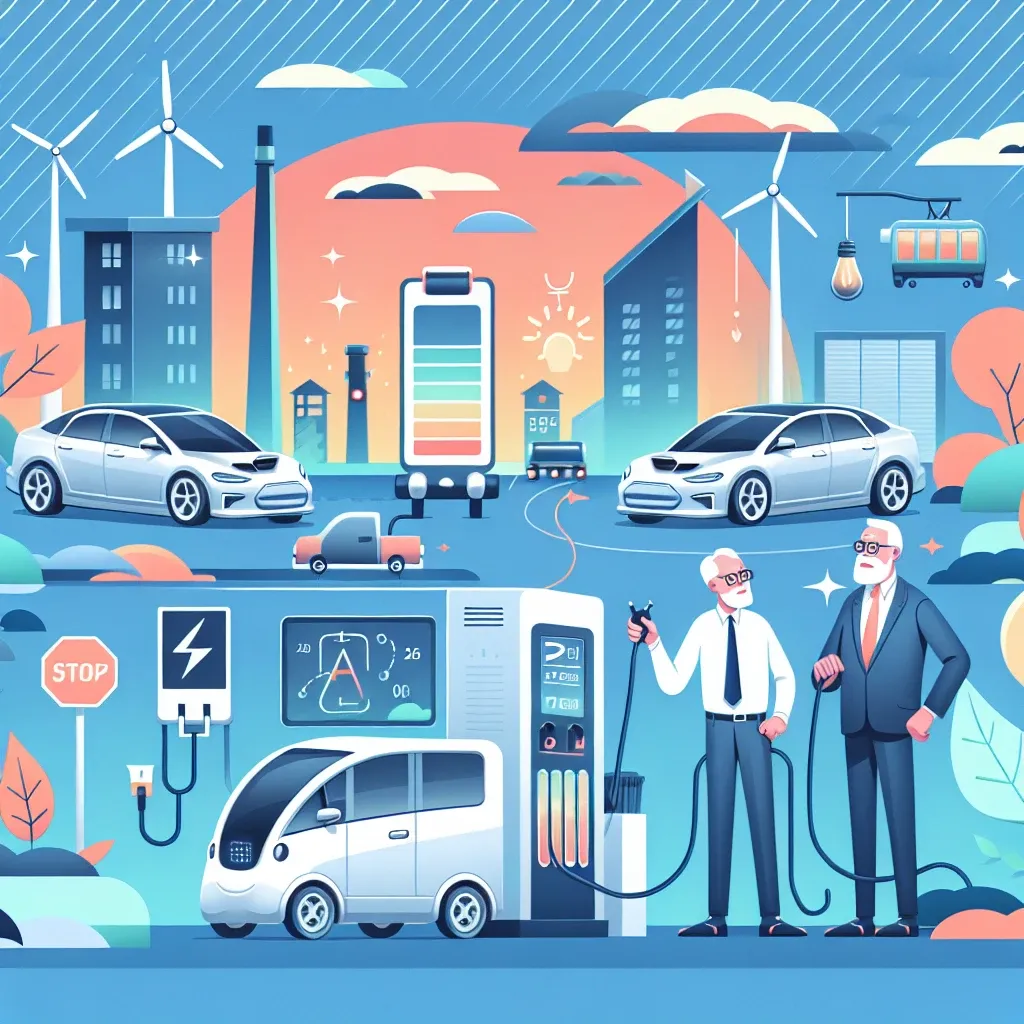
The Great Electric Vehicle Puzzle: Why Your Neighbor’s Smug Smile Might Be Hiding Charging Station Anxiety
Picture this: Harold, 68, just bought his first electric vehicle after months of research. He’s beaming with pride at the dealership, keys in hand, ready to save the planet one kilowatt at a time. Three weeks later, he’s parked on the shoulder of Route 66, staring at a flashing «5% battery» warning, and the nearest charging station is a mysterious 14 miles away according to his navigation system. Is it really there? Will it work? Does it accept his charging card? Welcome to the wonderful world of electric vehicles, where the future meets frustration in the most peculiar ways.
The electric vehicle market has exploded from roughly 2.1 million global sales in 2019 to over 14 million in 2023, according to the International Energy Agency. Yet despite this meteoric rise, three persistent problems plague potential buyers: choosing between vastly different EV models, conquering the psychological demon called range anxiety, and navigating a charging infrastructure that can feel like a scavenger hunt designed by someone with a wicked sense of humor.
Let’s cut through the marketing nonsense and examine what actually matters when you’re considering joining the electric revolution—because the devil, as they say, is in the kilowatt-hours.
TL;DR: The Electric Truth, Stripped Bare
- EV comparison boils down to four metrics: real-world range (not advertised range), charging speed, total cost of ownership over 5-7 years, and whether it fits your actual driving patterns—not your fantasy road trip to Yellowstone you’ll take once.
- Range anxiety is 60% psychological: Studies from AAA show that 58% of Americans worry about running out of charge, yet the average American drives just 37 miles daily—well within even the most modest EV’s capabilities.
- Charging infrastructure varies wildly by region: Urban coastal areas boast one public charger per 16 EVs, while rural Midwest regions struggle with one per 89 EVs as of September 2024 (U.S. Department of Energy data).
- Home charging changes everything: 80% of EV charging happens at home, making a Level 2 home charger more valuable than obsessing over public infrastructure for most drivers.
- The total cost calculation surprises skeptics: Despite higher purchase prices, EVs cost an average of $4,600 less over five years when factoring in fuel savings, maintenance, and available tax credits (Consumer Reports, 2024).
Electric Vehicles Comparison: The Numbers That Actually Matter
Walk into any dealership and the salesperson will dazzle you with horsepower figures, zero-to-sixty times, and panoramic glass roofs. That’s lovely, but when comparing electric vehicles, you need to focus on the specifications that affect your daily life, not your daydreams.
Real-World Range vs. EPA Fantasy Numbers
Here’s a dirty little secret the automotive industry would prefer you didn’t know: EPA range estimates are generated under laboratory conditions that bear little resemblance to actual driving. Cold weather, highway speeds, and running your heater can slash advertised range by 30-40%.
A 2023 study by Recurrent Auto found that EVs lose an average of 12% of their range in freezing temperatures, with some models dropping as much as 35%. That Tesla Model 3 rated at 358 miles? Expect closer to 240 miles on a frigid January morning with the heat blasting. This isn’t a defect—it’s physics. Batteries hate cold, and heating an EV cabin draws power directly from the same battery pack propelling the vehicle.
The smart comparison strategy focuses on real-world range under YOUR conditions, not ideal laboratory numbers. If you live in Minnesota, subtract 25-30% from EPA estimates. If you drive mostly highway miles at 75 mph, knock off another 15%.
Charging Speed: The Specification Nobody Explains Properly
Charging speed gets measured in kilowatts (kW), but what does that mean for your lunch break? A 50 kW charger adds roughly 150 miles of range per hour of charging. A 150 kW charger triples that. A 350 kW charger sounds amazing until you realize your vehicle can only accept 100 kW maximum—like trying to drink from a fire hose through a coffee stirrer.
Here’s the comparison chart the dealers won’t show you:
| Charging Level | Power Output | Miles Added Per Hour | Time for 10-80% Charge | Best Use Case |
|---|---|---|---|---|
| Level 1 (Standard Outlet) | 1.4 kW | 4-5 miles | 40-50 hours | Emergency backup only |
| Level 2 (Home/Public) | 7-19 kW | 25-60 miles | 4-8 hours | Overnight home charging |
| DC Fast Charging | 50-350 kW | 150-1,000 miles | 20-45 minutes | Road trips, quick top-ups |
| Tesla Supercharger V3 | 250 kW | 750 miles | 25 minutes | Tesla-specific travel |
Notice something? The difference between a mediocre fast charger and an excellent one is the difference between a coffee break and a full lunch. For daily use, this matters less than you think. For road trips, it matters enormously.
Total Cost Reality Check
Let’s address the elephant charging in the garage: EVs cost more upfront. A 2024 Chevy Equinox EV starts around $35,000 after federal tax credits, while a comparable gas-powered Equinox starts at $26,000. That’s a $9,000 premium that makes plenty of folks—especially those on fixed retirement incomes—understandably skeptical.
But here’s where the math gets interesting. According to Consumer Reports’ 2024 analysis of total ownership costs, that gap narrows considerably:
- Fuel savings: $1,200-$1,500 annually (assuming $3.50/gallon gas and $0.14/kWh electricity)
- Maintenance savings: $800-$1,000 annually (no oil changes, fewer brake replacements, simpler drivetrains)
- Federal tax credit: Up to $7,500 (subject to income limits and vehicle eligibility)
- State incentives: $500-$5,000 depending on location
Over a seven-year ownership period, many EVs cost the same or less than their gasoline equivalents. The catch? You need upfront capital and the patience to wait for savings to accumulate. That’s a genuine barrier for many senior citizens on fixed incomes, and dismissing this concern as «short-sighted» ignores economic reality.
EV Range Anxiety: The Psychological Monster Under the Bed
Range anxiety—that gnawing fear of being stranded with a dead battery—represents the single biggest barrier to EV adoption. A 2024 Pew Research study found that 47% of Americans cite range concerns as their primary reason for avoiding electric vehicles. The irony? Most of these people drive less than 40 miles daily.
The Numbers vs. The Feelings
Let’s get statistical for a moment. The U.S. Department of Transportation reports the average American drives 37 miles per day. Even the most modest modern EV—say, a Nissan Leaf with 149 miles of EPA range—provides four days of average driving on a single charge. If you charge at home overnight, you start each day with a «full tank.»
Compare this to gasoline vehicles, where most drivers don’t refuel until the needle approaches empty. Nobody experiences «gasoline anxiety» despite routinely driving around with enough fuel for just 50-100 miles. Why? Because gas stations are familiar, reliable, and take five minutes.
Range anxiety is less about actual range and more about charging infrastructure trust. Will the charger work? Will it be occupied? Will it accept my payment method? These legitimate questions trigger anxiety that wouldn’t exist if charging were as standardized as gas pumps.
The Cold Weather Panic (Partially Justified)
Here’s where skepticism is warranted: batteries do lose significant capacity in extreme cold. The AAA Automotive Research Center found that at 20°F, the average EV lost 41% of its range with climate control active. That 250-mile vehicle suddenly becomes a 147-mile vehicle—legitimately problematic for longer commutes or rural areas.
However, this fear often gets exaggerated. Modern EVs include battery thermal management systems that precondition batteries while plugged in, minimizing cold-weather losses. Schedule your departure while still connected to the charger, and the vehicle warms the battery using grid power, not precious battery reserves.
For folks in Arizona or Florida, cold weather range loss is irrelevant. For those in North Dakota or Maine, it’s a genuine planning factor—not a dealbreaker, but not something to ignore either.
The Road Trip Reality
Most range anxiety centers on road trips, despite these representing perhaps 2-5% of annual driving for most people. Yes, a 600-mile journey to visit grandchildren requires planning in an EV. You’ll stop 1-2 times for 30-40 minutes at fast chargers. Is this inconvenient compared to 5-minute gas stops? Absolutely. Is it the end of the world? Hardly.
A counterpoint worth considering: many seniors actually appreciate enforced breaks on long drives. A 2023 study in the Journal of Applied Gerontology found that drivers over 65 experience less fatigue on long trips when taking 30-minute rest breaks every 2-3 hours. That charging stop might improve safety, not hinder it.
Charging Infrastructure: The Wild West of Electric Vehicle Ownership
If you want to understand why EV adoption remains uneven, look no further than the chaotic mess of charging infrastructure. As of October 2024, the United States has approximately 138,000 public charging ports at roughly 53,000 locations, according to the Department of Energy’s Alternative Fuels Data Center. Sounds impressive until you realize that includes everything from broken 22-kW chargers in forgotten parking garages to Tesla’s admittedly excellent Supercharger network.
The Geographic Lottery
Where you live determines your charging experience more than any other factor. California alone hosts 42% of all U.S. public charging stations despite having just 12% of the population. Meanwhile, Wyoming offers one public charging location per 1,400 square miles. Planning an EV road trip through the Mountain West requires the route-planning skills of a 19th-century wagon train leader.
For urban and suburban residents near major metro areas, charging infrastructure works reasonably well. Apps like PlugShare, ChargePoint, and the excellent best electric cars 2026 resources show real-time availability, helping you locate working chargers. For rural residents, the infrastructure gap remains a legitimate concern that cheerful EV advocates often dismiss too quickly.
The Standards War Nobody Asked For
Here’s something that’ll make you nostalgic for the simplicity of gas pumps: competing charging standards. CCS (Combined Charging System), CHAdeMO, Tesla’s proprietary connector (NACS), and various Level 2 standards create confusion that serves nobody except the companies protecting their turf.
The good news? A de facto standardization is happening. Tesla opened its connector design (now called NACS) to other manufacturers, and Ford, GM, Rivian, and others committed to adopting it for 2025+ models. By 2026-2027, most new EVs will share compatible charging infrastructure. Until then, you might need an adapter—because of course you will.
The Home Charging Advantage
Here’s the most important charging fact that often gets buried: if you can charge at home, public infrastructure matters far less for daily use. Installing a Level 2 home charger costs $500-$2,000 depending on your electrical panel and garage setup. That investment transforms the EV experience from stressful to seamless.
You leave home with a full charge every morning—something impossible with gasoline vehicles. No gas station stops, no time wasted, no weather exposure. For the 70% of Americans with garage or driveway access, home charging eliminates 90% of charging infrastructure concerns.
The flip side? If you live in an apartment or condo without dedicated parking, EV ownership becomes significantly more complicated. This is a genuine equity issue that deserves more attention than it receives. Until apartment complexes and HOAs widely install charging infrastructure, EVs remain challenging for renters and multi-unit dwellers.
Making the Electric Vehicle Comparison That Matches YOUR Life
Enough theory—let’s talk practical comparison strategies for folks actually considering an EV purchase. The EV buying guide approach should start with your actual needs, not marketing brochures.
The Honest Driving Audit
Before comparing vehicles, track your actual driving for one month. Not what you think you drive—what you actually drive. Check your odometer weekly, note trip purposes, and identify your longest single journey. Many people discover they vastly overestimate their range needs.
If your longest regular trip is 80 miles round-trip, a 200-mile EV provides comfortable margin. That opens up less expensive options like the Chevy Bolt EUV or Nissan Leaf, saving $10,000+ compared to premium long-range models.
The Winter Weather Factor
Live somewhere with actual winter? Multiply your longest regular trip by 1.5 to account for cold-weather range reduction. That 80-mile round trip now requires 120 miles of rated range—still achievable with most modern EVs, but the calculation matters.
The Charging Access Reality
Be brutally honest about your charging situation:
- Can you install home charging? This is the single biggest factor in EV ownership satisfaction.
- Is workplace charging available? This can substitute for home charging if reliable.
- What’s your nearest DC fast charger? If it’s more than 30 miles away, that limits road trip flexibility.
- Do you park on the street? This makes EV ownership notably more challenging right now.
Common Myths That Need Debunking
Let’s address some persistent misconceptions that continue circulating at senior centers and coffee shops across America.
Myth: «EV Batteries Die After Three Years»
Battery degradation concerns are legitimate but widely exaggerated. Real-world data from Recurrent Auto analyzing 15,000+ EVs found that battery capacity averages 90% after five years and 85% after ten years. Yes, batteries degrade, but slowly. Most manufacturers warrant batteries for 8 years/100,000 miles, suggesting confidence in longevity.
Your smartphone battery dies quickly because it undergoes full charge cycles daily under thermal stress. EVs employ sophisticated battery management systems that prevent deep discharges, manage temperature, and optimize charging—extending lifespan dramatically.
Myth: «The Grid Can’t Handle Mass EV Adoption»
This concern pops up regularly, usually stated with great confidence by people who’ve never examined grid capacity data. A 2023 Department of Energy study found that if every light-duty vehicle in America switched to electric overnight (impossible, but hypothetical), electricity demand would increase roughly 25%.
That’s significant but manageable, especially since most charging happens overnight during off-peak hours when excess generation capacity sits idle. Utilities actually like EVs because they improve grid economics by utilizing off-peak capacity.
Myth: «EVs Are Just as Bad for the Environment»
The «long tailpipe» argument—that EVs simply move pollution from tailpipes to power plants—sounds plausible but doesn’t withstand scrutiny. Even when charged entirely from coal power (increasingly rare as coal declines), EVs produce fewer lifecycle emissions than gasoline vehicles due to electric motor efficiency.
The Union of Concerned Scientists calculated that in 2024, the average EV produces emissions equivalent to a gasoline vehicle getting 94 mpg when accounting for electricity generation. In regions with cleaner grids (most of the country), that equivalent rises to 120+ mpg.
People Also Ask: The Questions You’re Actually Wondering
What is the biggest problem with electric vehicles?
The charging infrastructure inconsistency, particularly outside major metro areas. While home charging solves daily needs, long-distance travel requires functional, available, and fast public chargers that don’t exist reliably in many regions yet.
How long do EV batteries really last?
Real-world data shows 85-90% capacity remaining after ten years or 150,000 miles. Battery degradation is gradual and manageable, not the catastrophic failure many fear. Manufacturers typically warrant batteries for 8-10 years.
Is range anxiety a real problem or overblown?
It’s psychologically real but statistically overblown for daily driving. With 200+ mile ranges and home charging, 95% of trips cause zero range concerns. Road trips require planning that some find unacceptable and others find trivial.
Can you really save money with an electric vehicle?
Yes, but it requires 5-7 year ownership to overcome higher purchase costs through fuel and maintenance savings. If you trade vehicles every three years, the math rarely works in your favor financially.
What happens if you run out of charge on the highway?
You call roadside assistance, same as running out of gas. AAA and manufacturers offer towing to chargers. It’s inconvenient and embarrassing, but it happens far less frequently than running out of gas—most EV drivers obsessively monitor battery levels.
The Skeptic’s Bottom Line: Should YOU Go Electric?
After cutting through the marketing hype and addressing the legitimate concerns, the honest answer is: it depends on your specific circumstances far more than general enthusiasm or fear.
EVs make excellent sense if you: have home charging capability, drive predictable daily routes under 100 miles, live in moderate climates or can plan around cold-weather range loss, can afford the higher upfront cost, and take road trips infrequently or don’t mind 30-minute charging stops.
EVs make questionable sense if you: lack home charging, frequently drive 200+ miles daily, live in extreme cold without garaged parking, operate on extremely tight budgets where every dollar counts immediately, or value total spontaneity for impromptu long trips without planning.
The charging infrastructure continues improving but remains genuinely uneven. Range anxiety is partly psychological but rooted in legitimate infrastructure inconsistencies. Electric vehicle comparison requires honest assessment of your actual needs versus advertised specifications.
Perhaps most importantly, despite all the environmental rhetoric, it’s perfectly reasonable to make this decision based on practical convenience and economics rather than planetary guilt. The technology works well for millions of drivers worldwide—7.5 million EVs on roads globally as of mid-2024—but that doesn’t mean it works for everyone right now.
The electric future is arriving whether we’re ready or not, but you don’t need to be an early adopter if the current state doesn’t match your lifestyle. The vehicles will improve, batteries will get better, and the charging infrastructure will eventually approach the reliability we take for granted with gasoline. Whether you jump in now or wait another three years depends on your tolerance for imperfection and your specific driving reality.
And if you do take the plunge? Maybe you’ll be the one with the smug smile—at least until you’re frantically searching for a working charger in rural Nebraska.