

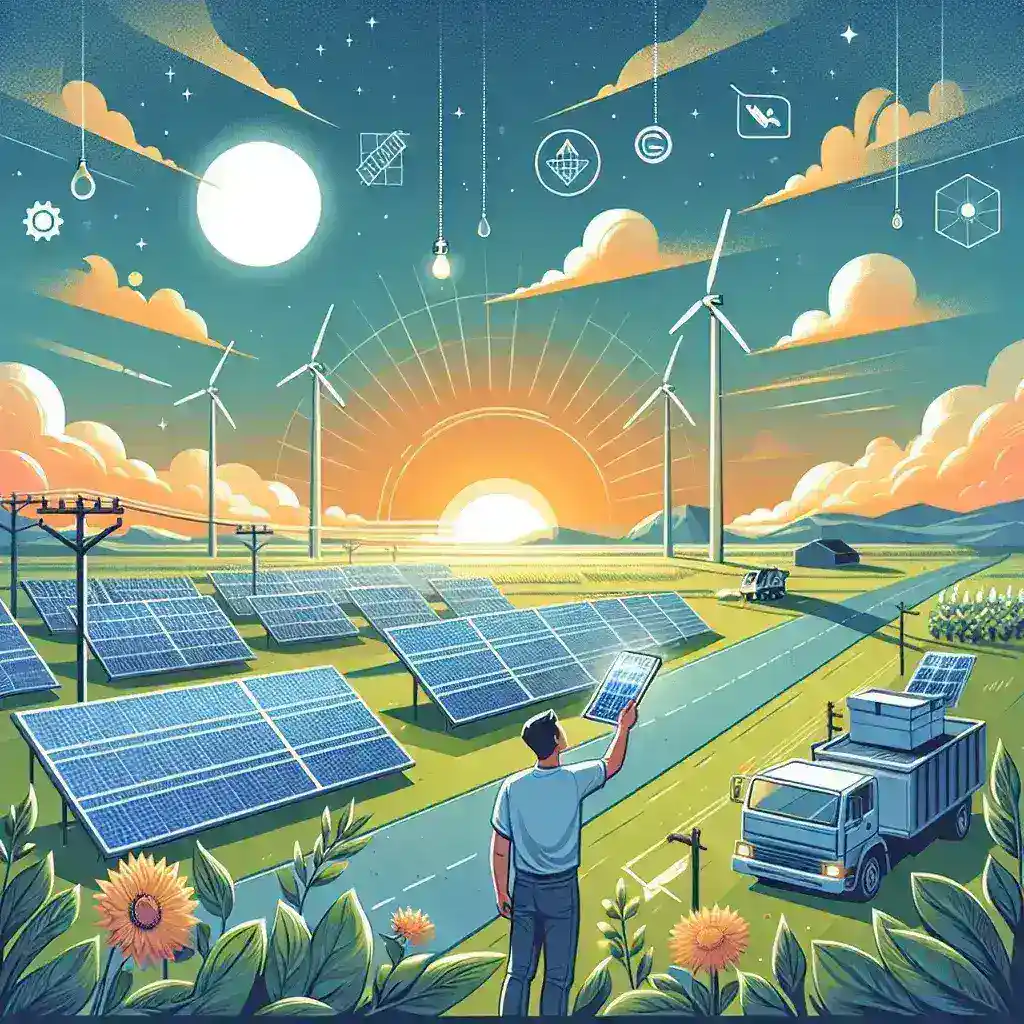
Understanding Solar Panels and Renewable Energy
Have you ever looked at your electricity bill and wondered if there’s a better way? You’re not alone. In 2024, over 4.5 million American households made the switch to solar energy, reducing their carbon footprints while cutting energy costs by an average of 70%. Solar panels represent just one facet of the broader renewable energy revolution that’s reshaping how we power our lives.
This guide walks you through everything you need to know about solar panels, renewable energy sources, and green technology. Whether you’re considering installing solar panels on your roof or simply want to understand the renewable energy landscape, you’ll find practical insights backed by current data and real-world examples.
The transition to renewable energy isn’t just an environmental choice—it’s increasingly an economic one. According to the International Renewable Energy Agency’s 2024 report, solar electricity now costs less than fossil fuel-generated power in 85% of global markets.
TL;DR – Key Takeaways
- Solar panel efficiency has reached 22-23% for residential systems, with costs dropping 89% since 2010
- Renewable energy sources (solar, wind, hydro, geothermal, biomass) now account for 30% of global electricity generation
- The average solar installation pays for itself in 6-8 years through energy savings
- Green technology extends beyond electricity to transportation, heating, and industrial processes
- Federal tax credits cover up to 30% of solar installation costs through 2032
How Solar Panels Convert Sunlight Into Electricity
Solar panels work through the photovoltaic effect, discovered by French physicist Edmond Becquerel in 1839. When photons from sunlight strike a solar cell, they knock electrons loose from atoms within the semiconductor material (typically crystalline silicon). This creates an electric current that flows through circuits embedded in the panel.
Modern solar panels consist of multiple layers working in harmony. The top layer features an anti-reflective coating that maximizes light absorption. Beneath this sits the semiconductor layer where the photovoltaic magic happens. A metal grid collects and channels the generated electrons, while a backing layer provides structural support and weather protection.
Types of Solar Panel Technology
Three primary solar panel technologies dominate the residential and commercial markets, each with distinct characteristics:
Monocrystalline panels use single-crystal silicon wafers, achieving the highest efficiency rates of 20-23%. These panels appear uniformly dark and perform better in low-light conditions. They’re the premium option, typically costing 20-30% more than alternatives but occupying less roof space due to higher power density.
Polycrystalline panels contain silicon fragments melted together, creating a distinctive blue-speckled appearance. With efficiency rates of 15-17%, they offer a budget-friendly entry point. They require slightly more installation area but have improved significantly in performance over the past five years.
Thin-film panels deposit photovoltaic material onto glass, plastic, or metal substrates. While less efficient (11-13%), they’re lightweight, flexible, and perform better in high temperatures. These excel in commercial applications where roof weight capacity matters more than space efficiency.
| Panel Type | Efficiency | Cost per Watt | Best Application | Lifespan |
|---|---|---|---|---|
| Monocrystalline | 20-23% | $0.90-$1.20 | Residential rooftops with limited space | 25-30 years |
| Polycrystalline | 15-17% | $0.70-$0.90 | Budget-conscious installations with adequate space | 20-25 years |
| Thin-Film | 11-13% | $0.60-$0.80 | Commercial buildings, flexible applications | 15-20 years |
The Complete Renewable Energy Ecosystem
Solar panels capture attention, but they’re part of a diverse renewable energy portfolio. Understanding this ecosystem helps you make informed decisions about which technologies best suit your needs.
Wind Energy: Harnessing Atmospheric Power
Wind turbines convert kinetic energy from moving air into electricity. The U.S. Department of Energy reports that wind energy capacity grew by 12% in 2023, now generating enough electricity to power 43 million homes. Offshore wind farms, particularly along the Atlantic coast, are experiencing rapid expansion with projects like Vineyard Wind producing 800 megawatts—enough for 400,000 homes.
For individual homeowners, small-scale wind turbines (rated at 5-15 kilowatts) can supplement solar installations in areas with consistent wind speeds above 10 mph. However, local zoning regulations often restrict residential wind turbines, making solar the more accessible option for most.
Hydroelectric Power: Water’s Timeless Energy
Hydroelectric systems generate electricity from flowing or falling water. While massive dams like Hoover Dam dominate the landscape, micro-hydro systems (under 100 kilowatts) offer renewable power for properties with streams or rivers. These systems operate 24/7, unlike solar panels that only produce during daylight hours, making them excellent for baseload power.
Geothermal Systems: Earth’s Underground Heat
Geothermal technology taps into the Earth’s constant underground temperature. For residential applications, geothermal heat pumps provide heating and cooling at 400% efficiency—meaning they deliver four units of heating/cooling energy for every unit of electricity consumed. While installation costs run $15,000-$35,000, the systems last 25-50 years with minimal maintenance.
Biomass Energy: Organic Matter Conversion
Biomass converts organic materials (wood pellets, agricultural waste, even algae) into usable energy. Modern biomass systems burn cleanly and efficiently, though they’re more common in rural areas with abundant organic waste streams. Advanced gasification technology now converts biomass into syngas, which powers generators with emissions comparable to natural gas.
Installing Solar Panels: A Step-by-Step Process
Transitioning to solar energy involves more than mounting panels on your roof. Here’s the realistic timeline and process you’ll experience.
Step 1: Energy Audit and System Sizing
Start by analyzing your current energy consumption. Review 12 months of utility bills to identify your average daily kilowatt-hour (kWh) usage. The typical American home consumes 30 kWh daily, requiring a 6-8 kilowatt solar system to offset most electricity needs.
Professional installers use tools like Helioscope or PVWatts to model your roof’s solar potential, accounting for shading, orientation, pitch, and local climate data. South-facing roofs with 30-40 degree pitches generate optimal output, but east and west orientations still produce 80-90% of maximum potential.
Step 2: Financial Analysis and Incentive Research
Calculate your return on investment using these variables:
- System cost (typically $15,000-$25,000 for residential installations before incentives)
- Federal Investment Tax Credit (30% through 2032, stepping down to 26% in 2033)
- State and local rebates (varying by location—California offers $0.25 per watt, for example)
- Net metering policies (whether your utility credits excess generation at retail or wholesale rates)
- Projected energy cost inflation (historically 2-3% annually)
Many homeowners exploring eco-friendly solutions discover that combining solar with energy efficiency upgrades (LED lighting, improved insulation, efficient appliances) maximizes savings potential.
Step 3: Permitting and Utility Interconnection
Your installer handles most paperwork, but expect 2-6 weeks for permit approval. The process includes:
- Building permits verifying structural adequacy and electrical code compliance
- Utility interconnection applications authorizing grid connection
- Homeowner association approval if applicable (some HOAs still resist despite state laws protecting solar rights)
- Engineering stamps certifying system design meets local requirements
Step 4: Installation and Activation
Physical installation typically completes in 1-3 days for residential systems. Crews mount racking systems to your roof, install panels, run conduit and wiring, and connect the inverter and monitoring equipment. After a final electrical inspection, your utility installs a bi-directional meter and grants permission to operate—usually 1-4 weeks post-installation.
Green Technology Beyond Solar Panels
The green technology revolution extends far beyond rooftop solar installations. Understanding these complementary technologies helps you build a comprehensive sustainability strategy.
Battery Storage Systems
Tesla Powerwall, LG Chem RESU, and similar lithium-ion battery systems store excess solar generation for nighttime use. With capacities of 10-15 kWh and costs around $10,000-$15,000 installed, these batteries provide backup power during outages and maximize solar self-consumption in areas without favorable net metering.
Battery technology is advancing rapidly—energy density improved 30% between 2020 and 2024 while costs dropped 45%. This trajectory makes storage increasingly practical for average homeowners, not just early adopters.
Smart Home Energy Management
Intelligent energy management systems optimize when appliances consume power. These platforms automatically run dishwashers, water heaters, and EV chargers during peak solar production hours, maximizing self-consumption. Sense, Emporia, and similar monitoring systems provide circuit-level visibility into energy use, helping identify phantom loads and inefficient appliances.
Electric Vehicle Integration
Electric vehicles represent mobile battery banks. Bidirectional charging technology (V2H—Vehicle to Home) enables EVs to power your house during outages or peak rate periods. The Ford F-150 Lightning’s 131 kWh battery can power an average home for three days. When you explore sustainable power options, considering EV integration can unlock additional value from your renewable energy investment.
Green HVAC Technologies
Heating and cooling account for 40-50% of residential energy use. High-efficiency heat pumps now function effectively even at -15°F, providing both heating and cooling at 300-400% efficiency. Mini-split systems offer zone-based control, eliminating the waste of heating or cooling unused rooms.
Common Misconceptions About Solar and Renewable Energy
Despite growing adoption, several persistent myths discourage people from embracing renewable energy. Let’s address them with evidence.
Misconception 1: Solar Doesn’t Work in Cloudy Climates
Germany leads Europe in solar adoption despite receiving less sunlight than most U.S. states. Modern panels generate electricity from diffused light on cloudy days—typically 10-25% of sunny day output. Seattle, known for overcast weather, still provides viable solar economics with annual production averaging 950 kWh per installed kilowatt.
The key metric isn’t sunshine hours but total solar irradiance. Check the National Renewable Energy Laboratory’s solar maps for your location’s specific potential rather than dismissing solar based on weather perception.
Misconception 2: Renewable Energy Is Too Expensive
This was true in 2010 when solar cost $6 per watt. By 2024, prices dropped to $0.70-$1.20 per watt—an 89% reduction. Lazard’s Levelized Cost of Energy Analysis 2024 shows utility-scale solar costs $30-$40 per megawatt-hour versus $60-$100 for coal and $40-$70 for natural gas.
For homeowners, the all-in cost per watt ($2.50-$3.50 installed) means a typical 7 kW system runs $17,500-$24,500 before the 30% federal tax credit, reducing net cost to $12,250-$17,150. With average savings of $1,500-$2,000 annually, payback periods range from 6-11 years depending on location and electricity rates.
Misconception 3: Solar Panel Manufacturing Harms the Environment
Solar panel production does consume energy and resources. However, lifecycle analyses show panels generate clean energy equivalent to their manufacturing footprint within 1-3 years. Over their 25-30 year lifespan, they produce 10-30 times more clean energy than was required for their creation.
Modern manufacturers increasingly use renewable energy in production. First Solar’s Ohio facility operates on 100% renewable electricity, and recycling programs now recover 95% of materials from decommissioned panels.
Evaluating Solar ROI: Real-World Economics
Understanding the financial return helps determine if solar makes sense for your situation. Let’s work through a concrete example using national average figures.
Consider a household in New Jersey consuming 900 kWh monthly (10,800 kWh annually) at $0.16 per kWh—an annual electricity cost of $1,728. A 7.5 kW solar system costing $22,500 before incentives would generate approximately 9,000 kWh annually in New Jersey’s climate.
After the 30% federal tax credit ($6,750), net cost drops to $15,750. With the state’s Solar Renewable Energy Certificate program adding $1,200 annually and net metering crediting excess generation at retail rates, first-year savings total approximately $2,600. This yields a 6-year simple payback period, after which the system generates nearly free electricity for another 19-24 years.
Your actual results depend on six critical variables:
- Local electricity rates (higher rates improve solar economics)
- Solar resource availability (annual sunlight hours)
- System cost (competitive bidding can reduce costs 15-20%)
- Available incentives (federal, state, utility, and local programs)
- Net metering policy (full retail credit versus reduced compensation)
- Energy consumption patterns (daytime usage maximizes solar value)
Financing Options for Solar Installations
Cash purchases deliver the highest long-term returns but require significant upfront capital. Solar loans spread costs over 10-20 years with interest rates of 3-8%, depending on creditworthiness. Many loans feature no money down and monthly payments lower than current electricity bills, creating immediate positive cash flow.
Leases and power purchase agreements (PPAs) require zero upfront investment. The solar company owns the system and sells you electricity at contracted rates (typically 10-20% below utility rates). While you won’t receive tax credits or incentives, you eliminate maintenance responsibilities and gain predictable energy costs.
People Also Ask: Solar and Renewable Energy FAQs
How long do solar panels actually last?
Quality solar panels last 25-30 years with minimal degradation. Manufacturers typically guarantee 85% of original output at year 25. Many panels from the 1980s still function today, though at reduced efficiency. Inverters require replacement every 10-15 years.
Can I go completely off-grid with solar panels?
Yes, but it requires substantial battery storage ($20,000-$40,000 for whole-home systems) and often backup generators for extended cloudy periods. Most homeowners find grid-connected systems with net metering more cost-effective, treating the grid as a virtual battery without storage costs.
Do solar panels work during power outages?
Standard grid-tied systems automatically shut down during outages for utility worker safety. Adding battery storage or a special grid-disconnect inverter enables solar operation during outages, powering critical loads like refrigerators, medical equipment, and communication devices.
What maintenance do solar panels require?
Minimal. Rain typically cleans panels adequately. In dusty areas, hosing panels 2-4 times yearly maintains optimal performance. Annual inspections checking connections, mounting hardware, and inverter operation cost $150-$300. No moving parts means maintenance costs stay under $20 annually for most systems.
Will solar panels damage my roof?
Properly installed systems don’t damage roofs and may extend roof life by protecting shingles from UV exposure and weather. Installers use flashing and sealants preventing water intrusion. If roof replacement becomes necessary, panel removal and reinstallation costs $1,500-$3,000 for typical residential systems.
The Future of Renewable Energy and Green Technology
Renewable energy technology continues advancing at remarkable pace. Perovskite solar cells, currently in laboratory testing, achieve 32% efficiency and cost half as much to manufacture as silicon panels. Commercial availability is expected around 2026-2027.
Building-integrated photovoltaics (BIPV) replace traditional construction materials with power-generating alternatives. Tesla’s Solar Roof tiles and similar products eliminate the visual impact that some homeowners find objectionable, though current costs run 60-80% higher than conventional panels.
Green hydrogen produced via electrolysis using renewable electricity may revolutionize sectors difficult to electrify—aviation, shipping, and heavy industry. The European Union’s 2024 green hydrogen strategy targets 40 gigawatts of electrolyzer capacity by 2030.
Policy and Market Trends
The Inflation Reduction Act of 2022 extended the 30% federal solar tax credit through 2032, providing long-term certainty that supports market growth. Twenty-three states now require utilities to source 50-100% renewable energy by 2030-2050, creating massive demand for solar and wind installations.
Corporate commitments reinforce these trends. Over 400 companies including Amazon, Google, and Walmart have committed to 100% renewable energy. This corporate demand drives utility-scale renewable development, reducing costs through manufacturing scale economies that benefit residential consumers.
Making Your Renewable Energy Decision
Transitioning to solar panels and renewable energy represents a significant decision requiring careful evaluation of your specific circumstances. Start by getting three quotes from certified installers (NABCEP certification indicates professional training). Compare system sizes, equipment specifications, warranties, and total costs.
Review your utility’s net metering policy and interconnection process. Some utilities impose lengthy waits or charge substantial fees, while others streamline approvals and offer generous renewable energy credits. These policy differences can swing project economics by thousands of dollars.
Consider your long-term plans. If you’re likely to move within five years, solar’s benefits may not fully materialize (though studies show solar homes sell faster and command 4-6% price premiums). Homeowners planning to stay 10+ years capture the greatest financial and environmental benefits.
The renewable energy transition isn’t merely an environmental imperative—it’s an economic opportunity. Energy independence, predictable costs, and freedom from fossil fuel price volatility provide tangible benefits beyond carbon reduction. Whether you start with a modest solar array or implement a comprehensive green technology strategy, each step contributes to a more sustainable energy future while delivering measurable financial returns.
The technology exists, costs have declined dramatically, and supportive policies make renewable energy accessible to average homeowners. The question isn’t whether to participate in the clean energy transition, but when and how you’ll begin your journey toward energy independence and environmental stewardship.